Padua and Its Protagonists
Twenty-two figures, their discoveries, and the city that made them
Bruno da Longobucco

early 13th c. – 1286
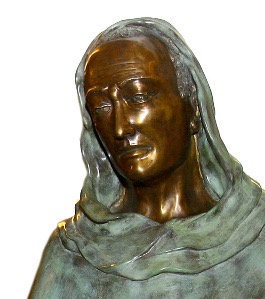
Around 1250, when surgery elsewhere in Europe belonged to barbers and wandering empirics, Bruno held one of the first three chairs of medicine of the Paduan Studium and made surgery a university discipline: he was the first academic surgeon of the Middle Ages. His Chirurgia magna, completed in Padua in 1253, served Europe as an official textbook for generations, and it contains the first Western description of operative male castration, in which he taught that excision of the testis was superior to crushing – surgical urology reasoned from anatomy, five centuries before the specialty had a name. He died in Padua in 1286.
Pietro d’Abano
1257 – 1316
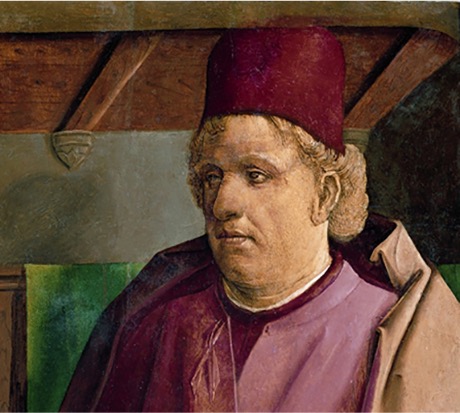
Born a few miles from the city, Pietro d’Abano returned from Constantinople and Paris to give Padua its first scientific celebrity. His Conciliator confronted the great contradictions between philosophers and physicians question by question, and taught Europe that medicine had to argue, not merely quote. Twice tried by the Inquisition and never broken, he died in Padua in 1316, and the astrological programme of the Palazzo della Ragione still speaks his doctrine to anyone who looks up at its walls.
Giotto
1267 – 1337
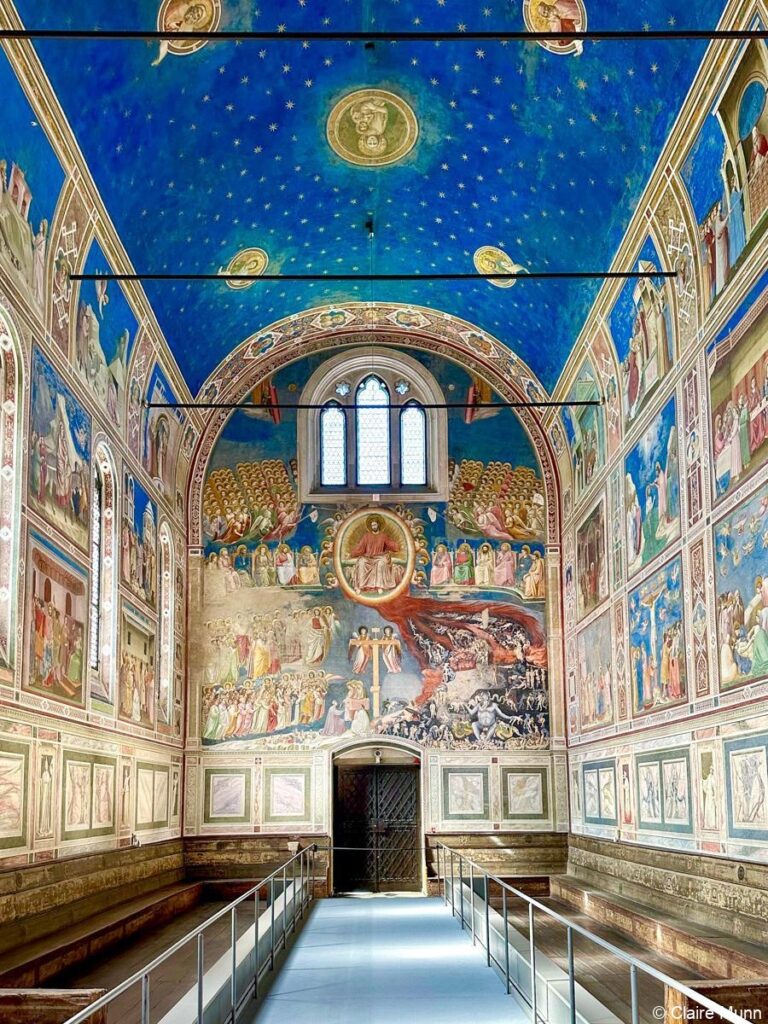
In the Scrovegni Chapel (1303–1305) Giotto changed European painting: weight, space and human emotion entered the fresco, and art learned to observe. Above the Nativity he painted not the conventional star of Bethlehem but the actual comet he had watched cross the sky in 1301 – Halley’s comet. When the European Space Agency flew a probe through that comet’s coma in 1986, it named the spacecraft Giotto, in homage to a Paduan wall: the first portrait of a comet drawn from life.
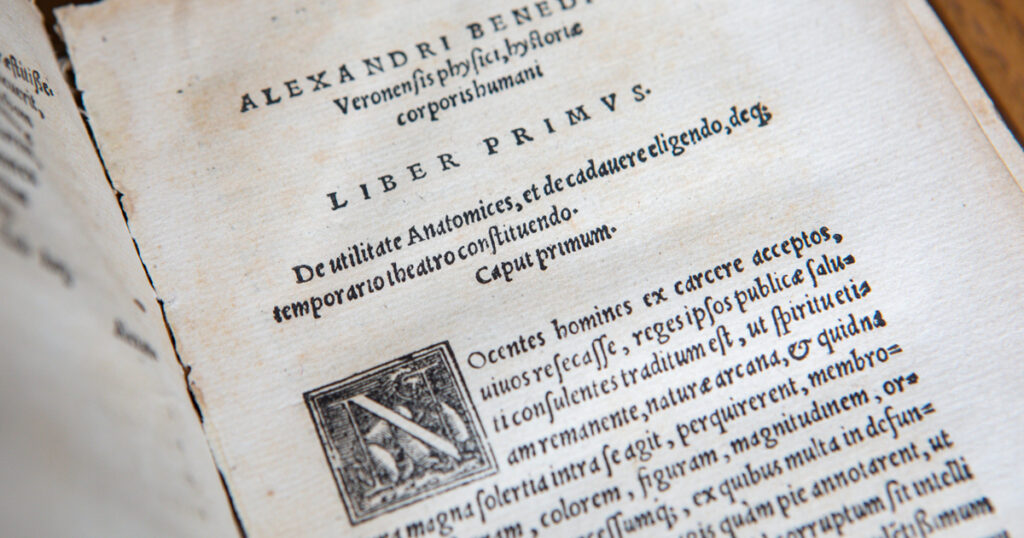
Alessandro Benedetti
1450 – 1512
A Paduan graduate of 1475 and professor of medicine and anatomy from 1490, Benedetti erected a temporary wooden anatomical theatre for public dissections – the idea Padua would later make permanent and famous. His Anatomice, sive historia corporis humani (1502), read by Leonardo da Vinci, brought into Western surgical literature the first report of nasal reconstruction with an arm flap, the operation the Branca family had kept secret in Sicily. Its closing page urges every student and surgeon to seek truth in the anatomical theatre: the Paduan manifesto, written forty years before Vesalius.
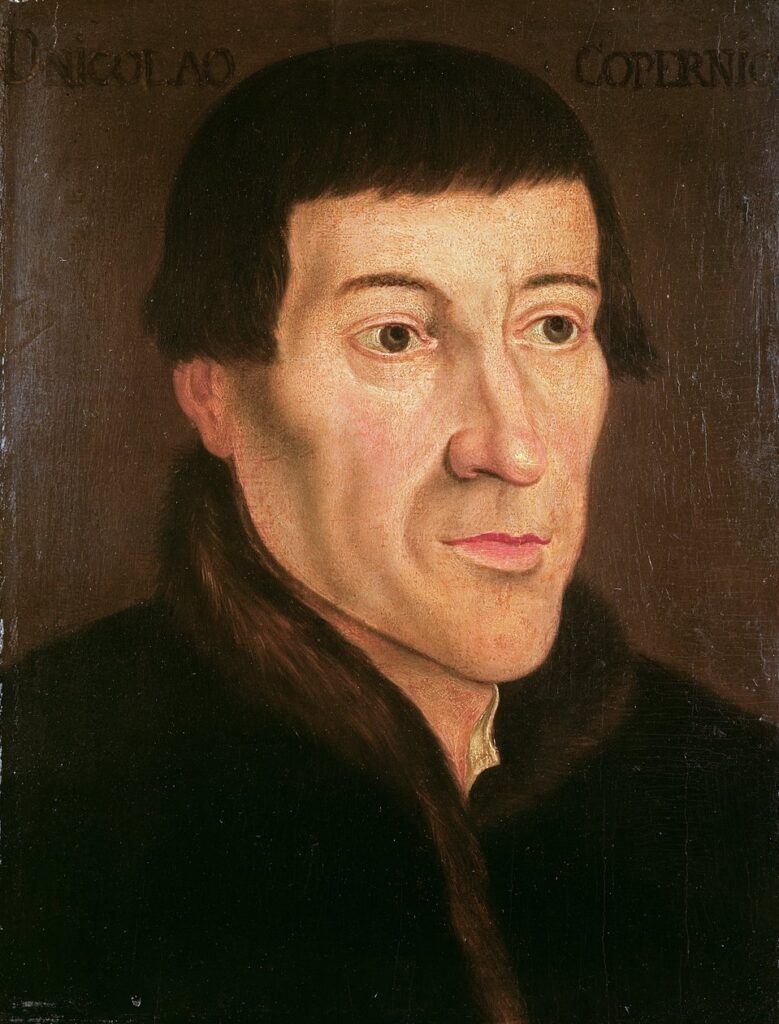
Nicolò Copernico (Nicolaus Copernicus)
1473 – 1543
The man who moved the Earth studied medicine in Padua from 1501 to 1503, adding Greek to his mathematics and completing the education of the most consequential mind ever enrolled in the Studium. He served for decades as a practising physician on the strength of his Paduan training, while De revolutionibus orbium coelestium matured in silence. It appeared in 1543 – the same year as Vesalius’s Fabrica, written in Padua: one year, two books, and both the heavens and the human body remade.
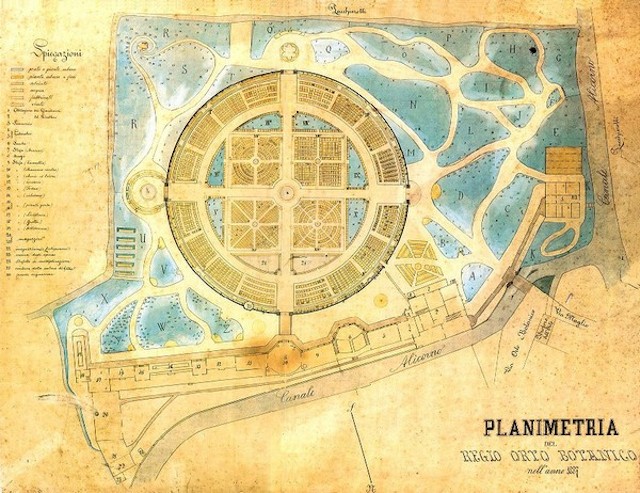
Francesco Bonafede
1474 – 1558
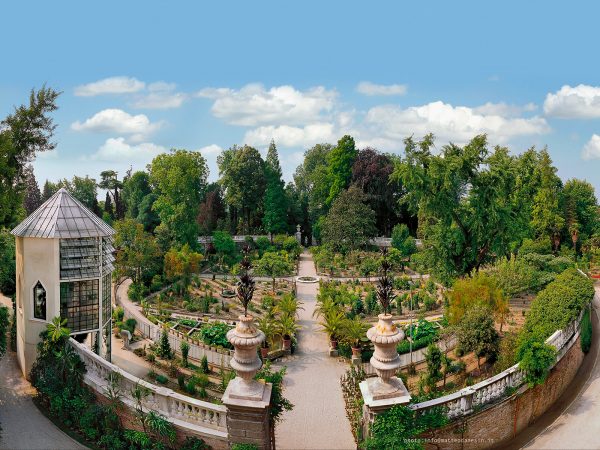
Bonafede, a Paduan by birth and training, held from 1533 the first Paduan chair devoted to medicinal plants and refused to teach them from corrupted woodcuts: students, he insisted, must see the living plant. He won the Venetian Senate over, and in 1545 the Orto botanico was founded – the oldest university botanical garden in the world still in its original site, today a UNESCO World Heritage Site. Every teaching garden, and every pharmacology course that begins with the specimen rather than the text, descends from his idea.
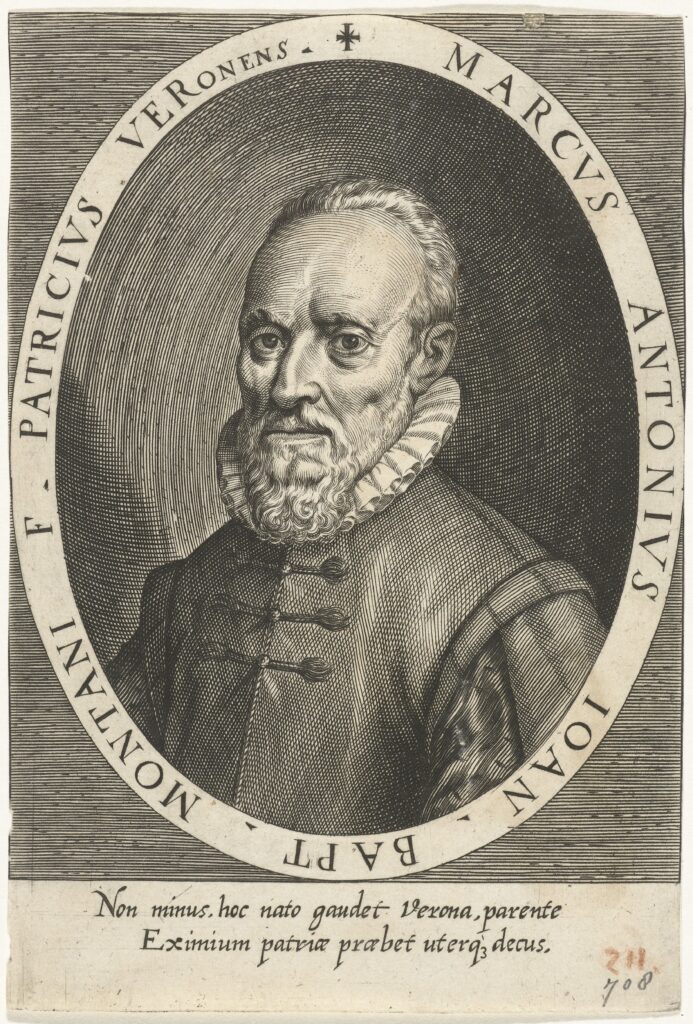
Giambattista Da Monte (Montanus)
1489 – 1551
Da Monte, professor of practical medicine from 1539, did something no university had done before: he took his students to the beds of the sick at the hospital of San Francesco and taught medicine on the living patient, case by case. Clinical teaching – the daily bread of every medical school on earth – was born there, and his foreign pupils carried it across Europe until Leiden and the world adopted it. Padua did not only describe the body first; it also invented the way medicine is taught.
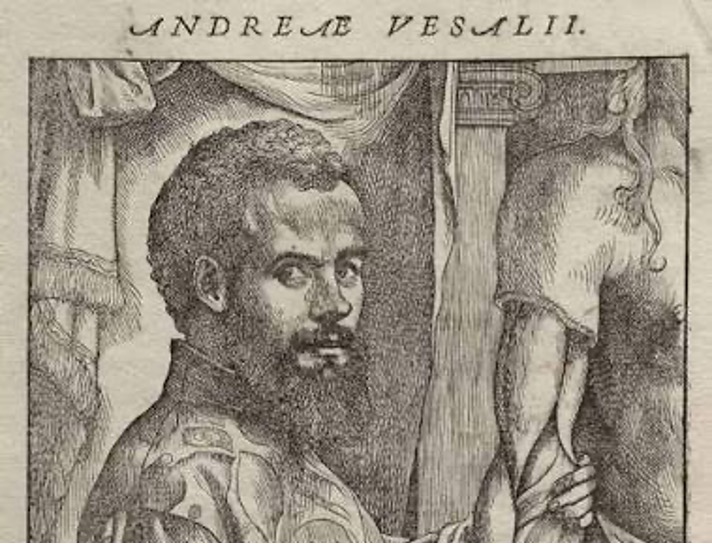
Andrea Vesalio (Andreas Vesalius)
1514 – 1564
Appointed to the Paduan chair at twenty-three, the day after his graduation in 1537, Vesalius took the knife into his own hands and dissected before his students – and Galen’s thousand-year authority fell. De humani corporis fabrica (1543), built on five years of Paduan dissections, founded modern anatomy; its fifth book gave the first systematic, illustrated account of the kidneys, ureters, bladder and male genital organs from human dissection, with step-by-step instructions for dissecting them. Urological anatomy, like all anatomy, begins on his Paduan table.
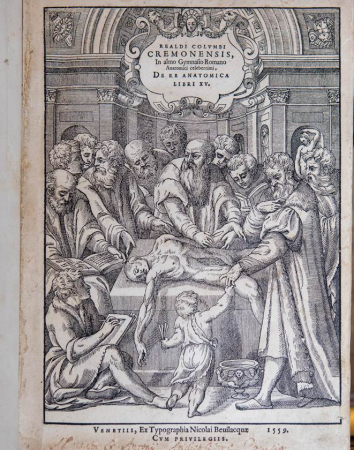
Realdo Colombo
1516 – 1559
Vesalius’s pupil and his successor on the Paduan chair in 1543–1544, Colombo went on to describe in De re anatomica (1559) the pulmonary transit of the blood – the discovery that the blood passes through the lungs, without which Harvey’s circulation is unthinkable. The chair he inherited in Padua was the launching pad: within one generation the same lectern passed from the man who rebuilt the body to the man who set its blood in motion.
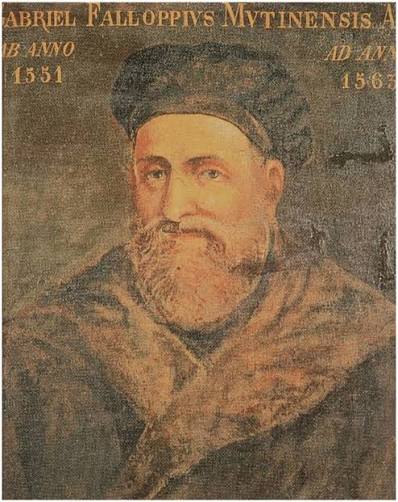
Gabriele Falloppio
1523 – 1562
In eleven Paduan years Falloppio corrected Galen and Vesalius alike and left his name inside the human body: the tubes, the aqueduct, the canal. For urology his Observationes anatomicae (1561) are a founding text: he clarified the gross anatomy and blood supply of the kidney down to its finest branches, described the human calyces and papillae with precision, and showed that the multipapillary human kidney was not the unipapillary dog kidney that had misled his predecessors. He also reported the first tested protective sheath against syphilis – genito-urinary medicine avant la lettre. He died in Padua at thirty-nine.
Melchiorre Guilandino (Melchior Wieland)
1520 – 1589
Wieland’s road to Padua reads like a novel: botanical journeys through the Levant and Egypt, capture by corsairs, slavery at the oar, and ransom paid by Gabriele Falloppio. From 1561 he directed the botanical garden and made it a crossroads of European science, corresponding with Gessner and Aldrovandi and writing the first scholarly monograph on papyrus. Linnaeus named the genus Guilandina in his honour, and he lies in the Basilica del Santo beside the friend who freed him – Padua repaid with a lifetime.
Girolamo Fabrici d’Acquapendente
1533 – 1619
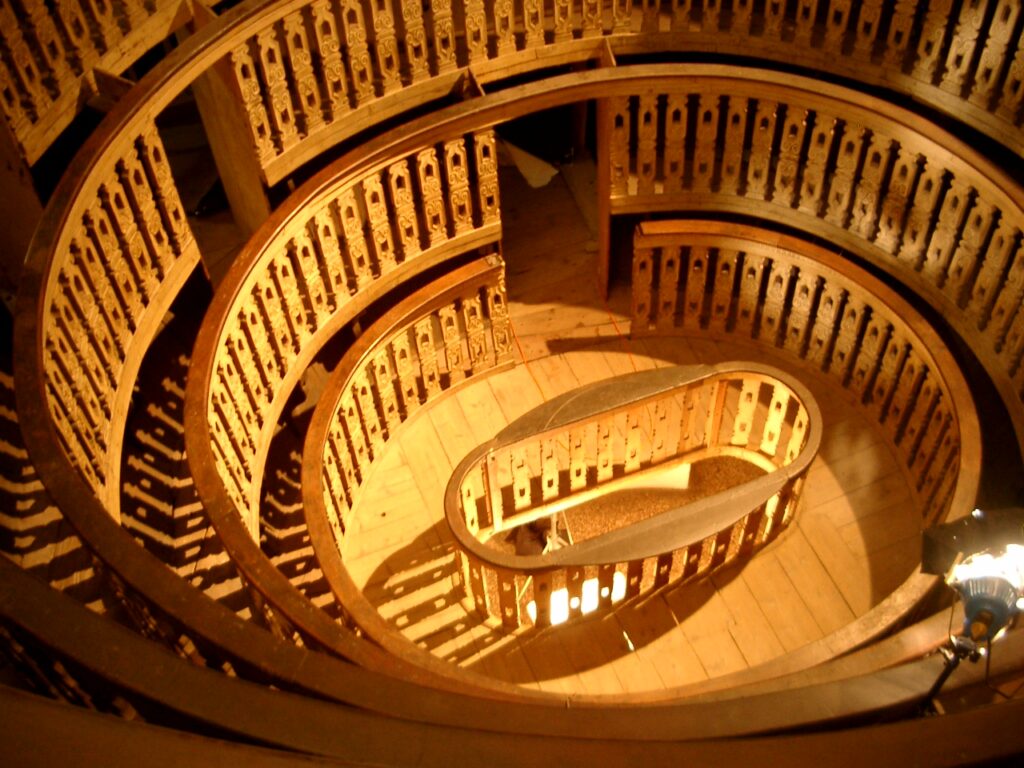
For half a century Fabrici was Paduan anatomy. In 1594 he gave the university the permanent anatomical theatre – still intact in Palazzo Bo, the mother of every anatomical theatre in Europe. His De venarum ostiolis (1603) described the valves of the veins, the observation his pupil Harvey turned into the circulation of the blood; his embryological atlases founded comparative embryology; his surgical Opera, reprinted for two centuries, codified the operations and instruments of the age. Casseri, Spigelius and Harvey sat on his benches: one teacher, three chapters of the history of medicine.
Galileo Galilei
1564 – 1642
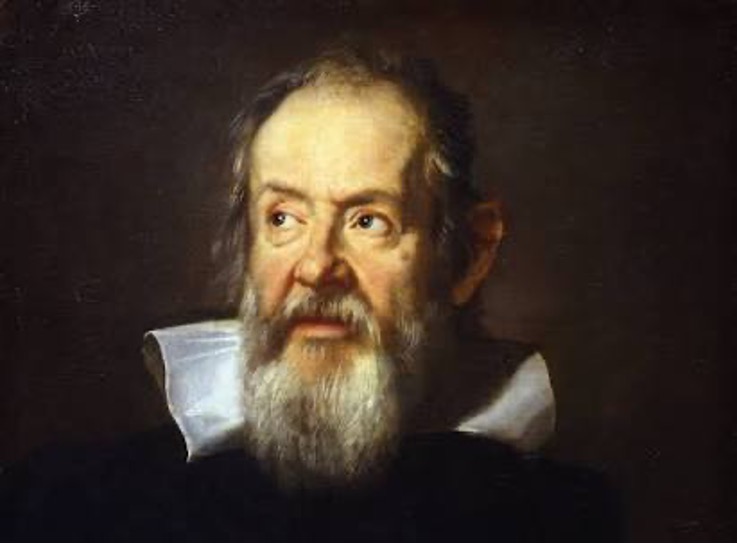
Galileo taught mathematics in Padua from 1592 to 1610 and called them the eighteen best years of his life. Here he worked out the law of falling bodies, built his workshop, perfected the telescope – and in the winter of 1609–10, from Padua, saw what no human eye had seen: the mountains of the Moon, the satellites of Jupiter, the countless stars of the Milky Way, published in the Sidereus Nuncius (1610). Modern observational science has a birthplace, and it stands between the Bo and his house in via Vignali.
Giulio Cesare Casseri
1552 – 1616
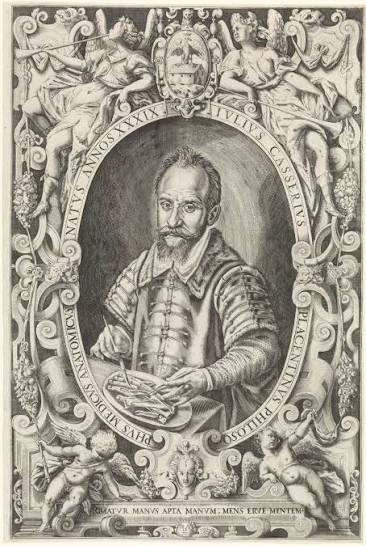
Casseri entered Padua as Fabrici’s household servant and rose to the chair of the man he had served – the most Paduan of careers, talent recognised whatever its origin. His De vocis auditusque organis (1600–01) founded the comparative anatomy of voice and hearing, and his Tabulae anatomicae (1627), 97 copper engravings of unsurpassed beauty, gave the seventeenth century its finest anatomical images – the urogenital plates among the most precise ever drawn, images urologists would study for two hundred years. He died in Padua in 1616 and rests in the Eremitani.
William Harvey
1578 – 1657
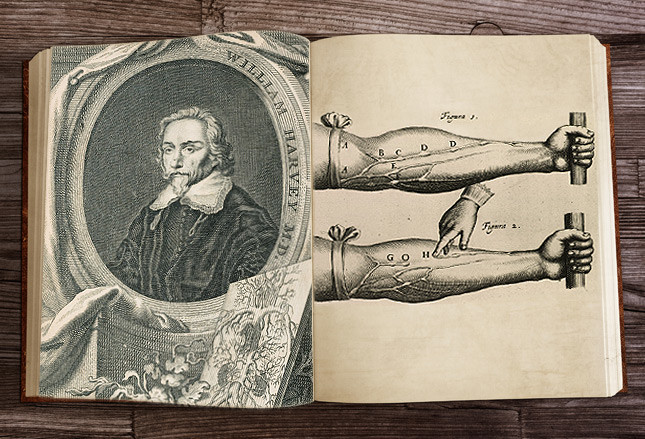
Harvey took his Paduan degree in 1602 as Fabrici’s pupil, and his coat of arms still looks down from the walls of Palazzo Bo. From the valves of the veins his teacher had shown him, he reasoned his way to the greatest physiological discovery of the age: De motu cordis (1628) and the circulation of the blood. Asked where modern physiology began, England answers with Harvey; Harvey answered with Padua.
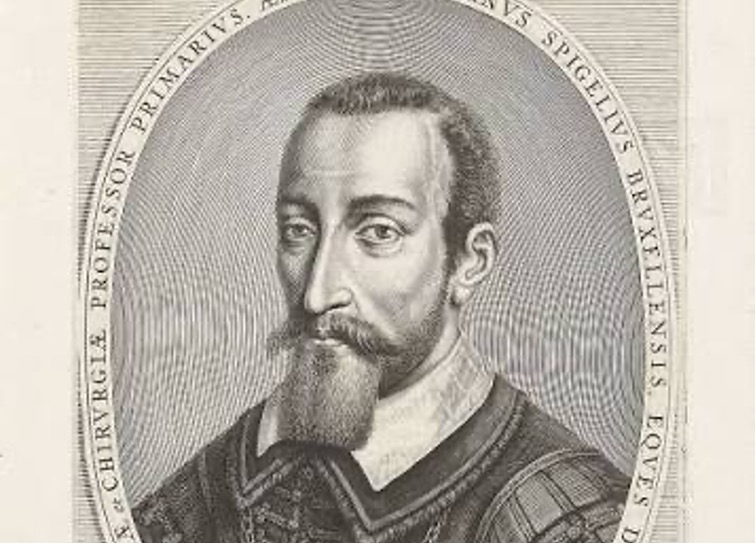
Adriaan van den Spiegel
1578 – 1625
Spigelius came from Brussels to study under Fabrici and Casseri, and Padua kept him: from 1616 he held the chair of anatomy and surgery until his death in the city in 1625. Every surgeon who approaches the abdominal wall crosses his name – the Spigelian line, the Spigelian hernia – and every liver surgeon knows his lobe. His posthumous De humani corporis fabrica libri decem, printed with Casseri’s plates, united the words of one Paduan professor with the images of another: the school speaking with one voice.
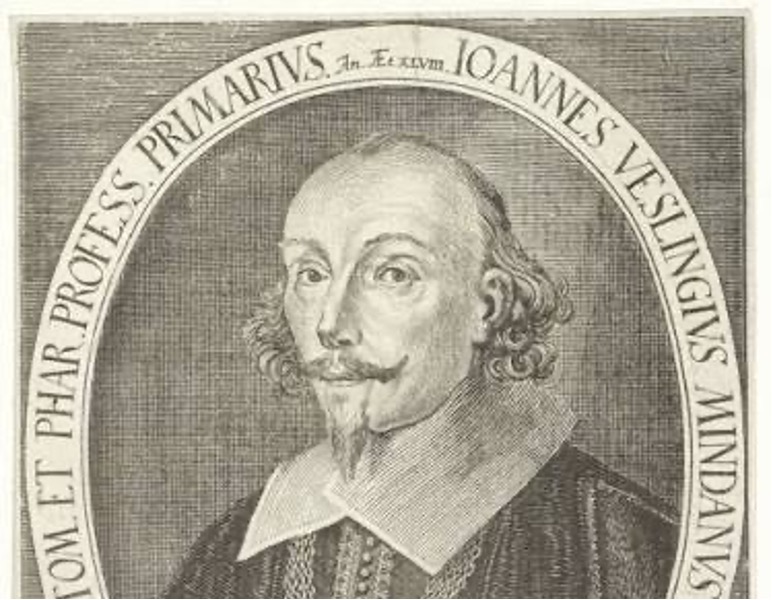
Johann Vesling
1598 – 1649
Called from Minden to the Paduan chair in 1632, Vesling taught anatomy in Fabrici’s theatre for seventeen years and directed the botanical garden, botanising as far as Egypt. His Syntagma anatomicum (1641) – concise, exact, superbly illustrated, the urogenital organs included – became the anatomy textbook of Europe, translated and reprinted for a generation of physicians from Amsterdam to Constantinople. Padua’s teaching travelled the world in his pages.
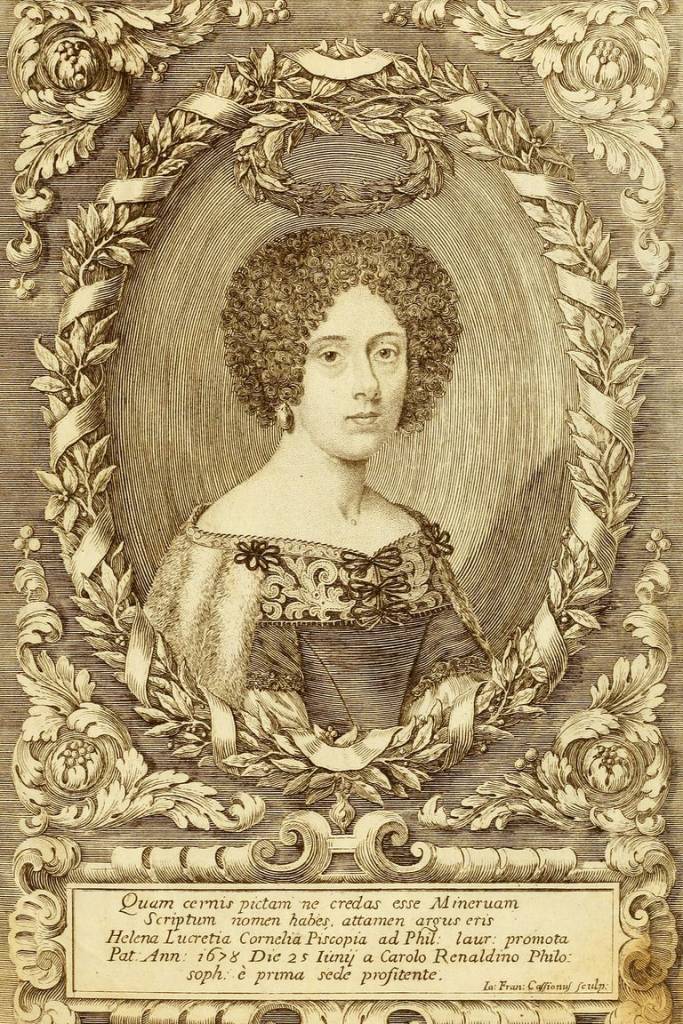
Elena Lucrezia Cornaro Piscopia
1646 – 1684
On 25 June 1678, before a crowd so large it had to move to the cathedral, a Venetian noblewoman defended her theses and Padua conferred on her the doctorate in philosophy: Elena Lucrezia Cornaro Piscopia, the first woman in the world to receive a university degree. Denied theology because of her sex, she conquered philosophy instead, in Latin, before the assembled doctors. Her statue at the foot of the great staircase of the Bo greets every student who enters – a reminder of who opened the door.
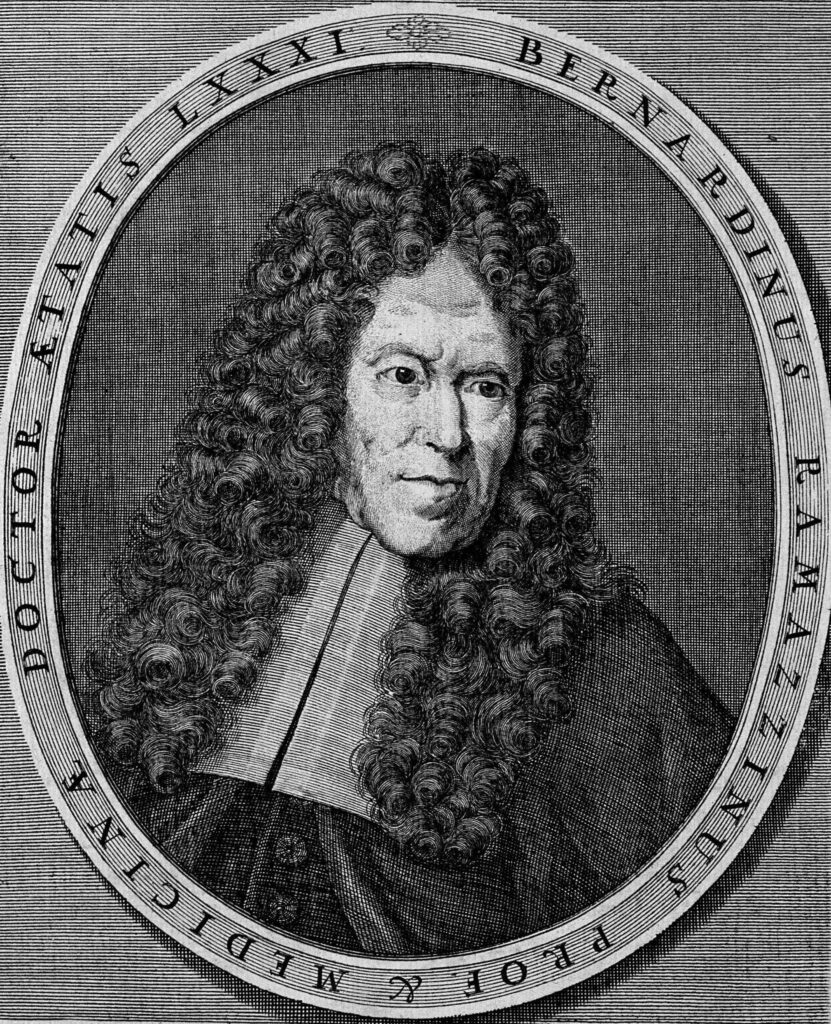
Bernardino Ramazzini
1633 – 1714
Padua called Ramazzini to the chair of practical medicine in 1700, the year his De morbis artificum diatriba appeared; the definitive, enlarged edition was published here in 1713. Built on direct observation of workers at their trades – miners, gilders, printers, boatmen – it founded occupational medicine entire, and added one immortal question to the Hippocratic interview: what is your trade? Nearly blind, he taught to the end and died in Padua in 1714, the founder of a discipline that protects workers on every continent.
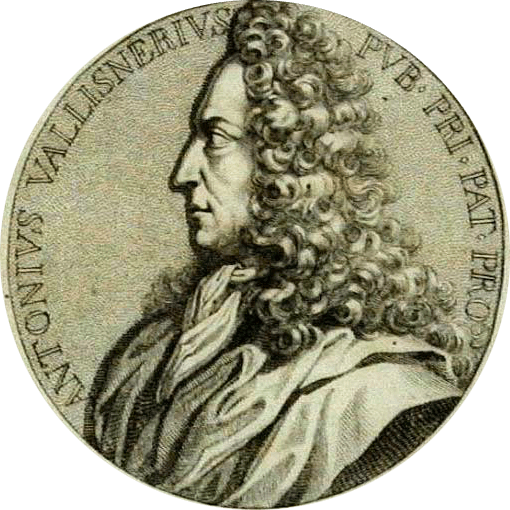
Antonio Vallisneri
1661 – 1730
Malpighi’s greatest pupil held the Paduan chairs of practical and then theoretical medicine for thirty years, and used them to make the life sciences experimental: he traced the true origin of springs, demolished spontaneous generation with observation after observation, and studied the generation of insects and man with the microscope. He wrote science in Italian so that his country could read it, and Linnaeus named Vallisneria after him. His collections, given to the university in 1734, seeded Padua’s scientific museums.
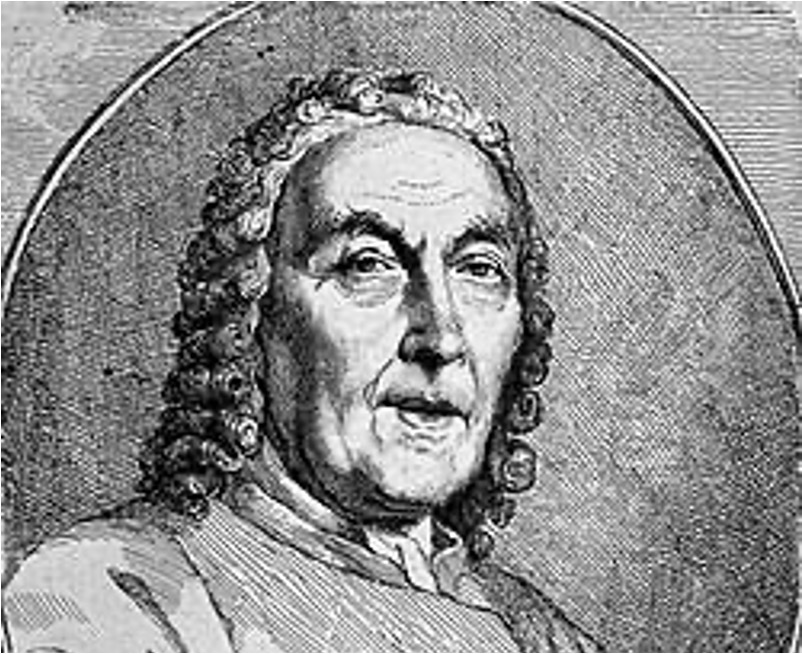
Giovanni Battista Morgagni
1682 – 1771
For sixty years Padua was Morgagni’s city, and Morgagni was Europe’s anatomist. De sedibus et causis morborum (1761), written at seventy-nine on some 700 autopsies of patients he had treated in life, founded pathological anatomy: diseases have a seat, and the seat explains the symptoms. Urology owes him more than any other discipline of the age – the urethral lacunae and the hydatid of the testis that bear his name, the description of the middle prostatic lobe, the first account of epispadias, and the anatomo-clinical portraits of urinary retention, stone disease, hydronephrosis and bladder tumours. Every biopsy report written today speaks his language.
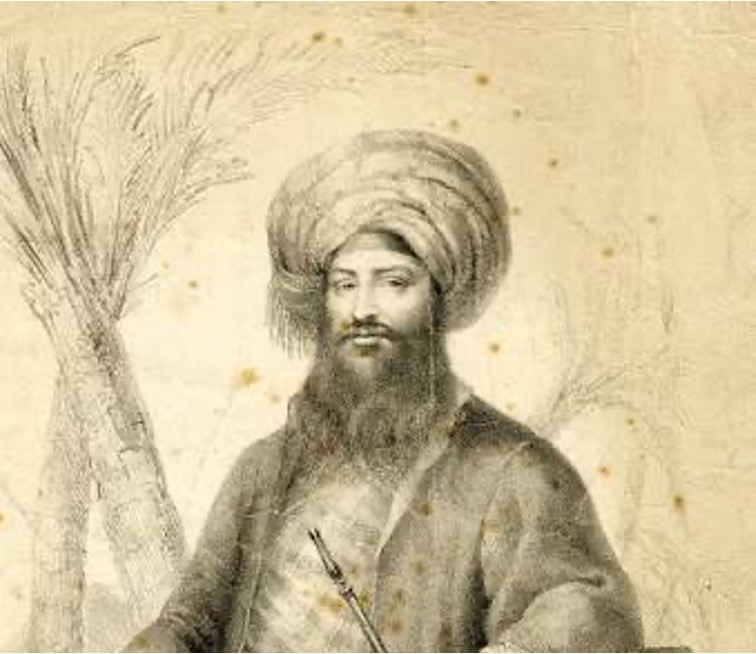
Giovanni Battista Belzoni
1778 – 1823
Born in Padua in 1778, a barber’s son of gigantic stature, Belzoni went from the London stage to the Nile and became the most spectacular explorer of his century: he moved the seven-ton bust of Ramesses II to the river for the British Museum (1816), cleared the sand from the great temple of Abu Simbel (1817), and in 1818 was the first man in modern times to enter the pyramid of Khafre, signing his name in the burial chamber. To his native city he sent two granite statues of the goddess Sekhmet, which still watch over Padua’s civic collections: the son who conquered Egypt did not forget home.
Where are you now?
Find out where you are.
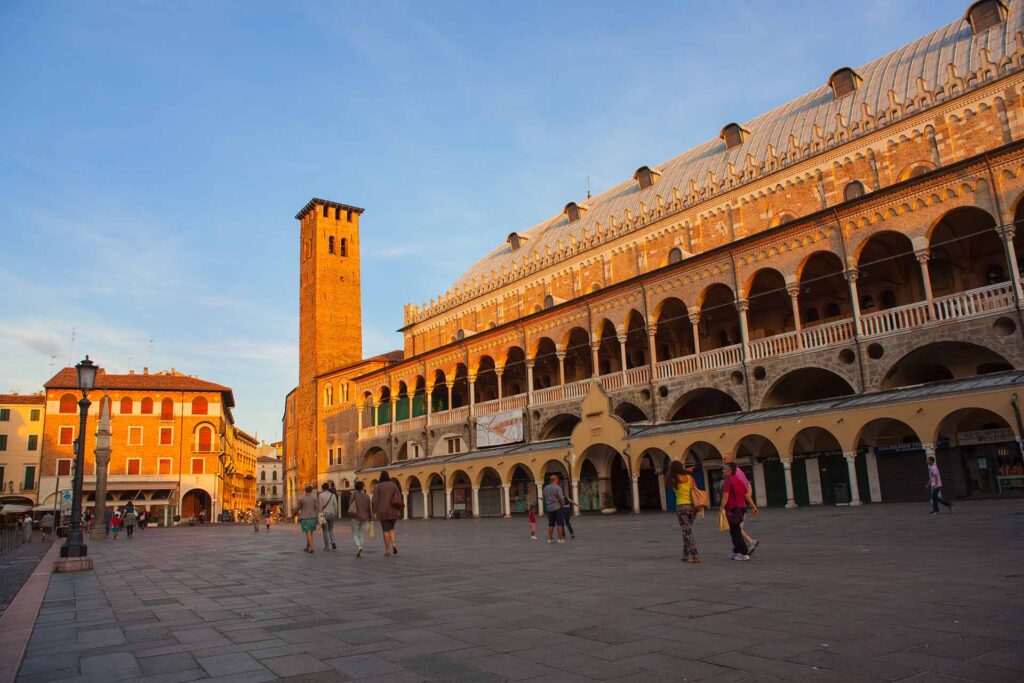
Piazza dei Frutti (o della Frutta)
For eight centuries, every morning, Padua has done exactly the same thing in this square: sold and bought under the open sky. Piazza della Frutta is one of the two great market squares pressed against the Palazzo della Ragione (1218), whose immense hanging hall — the Salone, frescoed with the astrological cycle that tradition ties to Giotto and to the doctrine of Pietro d’Abano — divides it from its twin, Piazza delle Erbe. At its corner, the “Canton delle busie”, the corner of lies, still shows the official measures carved in stone so that no merchant could cheat: the medieval city’s idea of verified data. The market has never stopped; it is the oldest continuously running institution in Padua after the university itself.
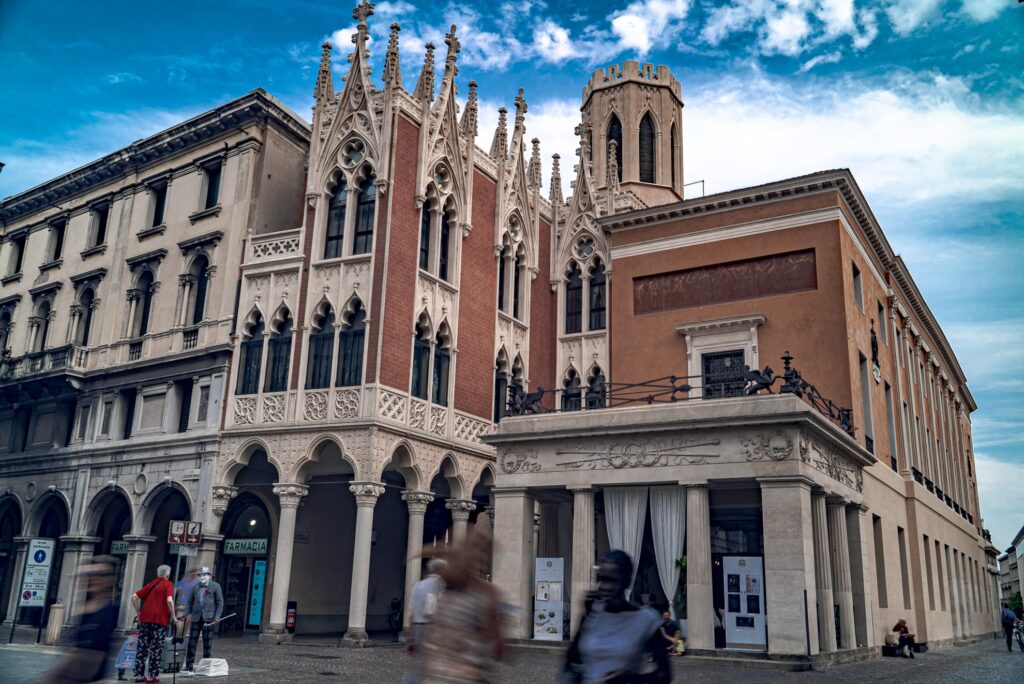
Caffè Pedrocchi
A few steps from the university, Giuseppe Jappelli built for Antonio Pedrocchi a neoclassical café that opened in 1831 and soon had no rivals in Europe — Stendhal admired it, and Padua called it “the café without doors”, because until 1916 it never closed, day or night. In its Green Room anyone, above all penniless students, could sit for hours without ordering: an institution of hospitality that still holds today. On 8 February 1848 students rose here against Austrian rule, and a bullet hole preserved in the wall of the White Room marks the spot. For two centuries professors, students and travellers have argued, studied and conspired at its tables: the university’s living room.
The University of Padua
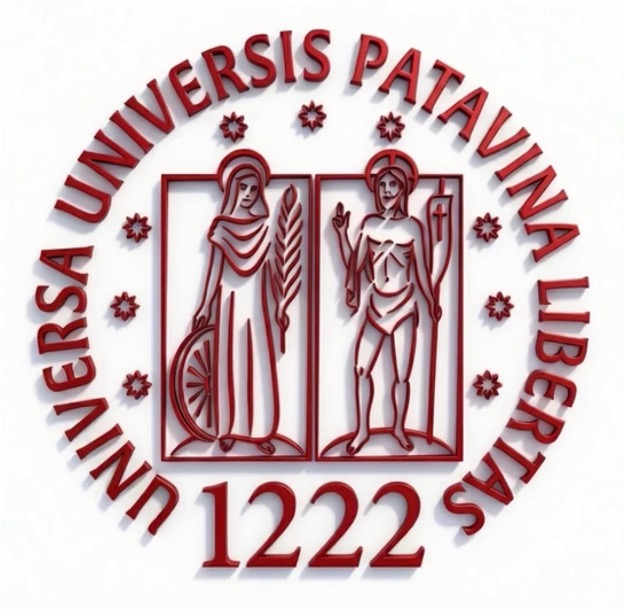
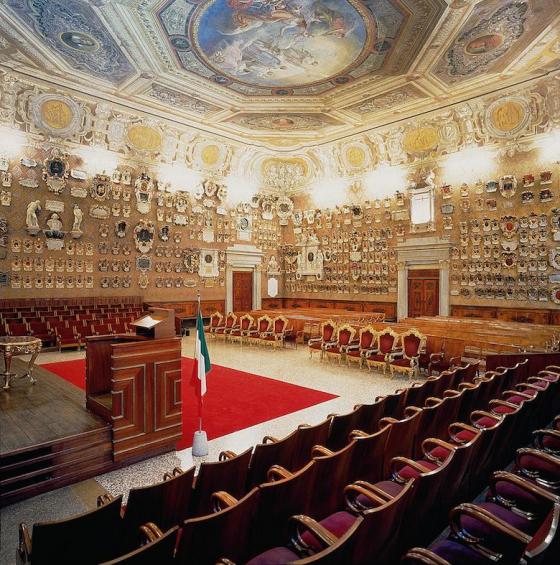
Padua’s university was not founded by pope or emperor: it was born in 1222 from a secession of scholars who left Bologna in search of freedom, and freedom became its motto — Universa universis patavina libertas. Under Venice it became the place where Europe came to think: Vesalius dissected here, Galileo taught here for eighteen years, Harvey graduated here, and students of every nation and faith — Protestants, Jews, Greeks — could study and take degrees when much of Europe barred its doors to them. It gave the world the first permanent anatomical theatre (1594), the oldest university botanical garden (1545) and the first woman graduate (1678). In 1945 it became the only Italian university awarded the Gold Medal of the Resistance, for the students and professors who fought and died against the occupation: eight centuries on, the motto still has teeth.
The Logo
The seal of the university is a compressed history lesson. It carries the red cross of the Commune of Padua and the date MCCXXII, and above them the two patrons of the medieval Studium: Saint Catherine of Alexandria for the Universitas Iuristarum, the jurists, and the risen Christ for the Universitas Artistarum — the philosophers and the physicians. The choice is pointed: Catherine, who defended herself alone before her judges with pure eloquence, stands for the law; the risen Christ, patron of the physicians called to give life back to sick bodies, stands for medicine. Around them runs the motto that explains everything else in this dossier: Universa Universis Patavina Libertas — all of Padua’s liberty, whole, for everyone. The version used today, on a blue field with nine stars and the gothic inscription Universitas Studii Paduani, is the 1966 redesign by the sculptor Luigi Strazzabosco, faithful to the ancient figures.